



Why Industry Giants Are Flocking to TEDA for Embodied AI Layouts
TEDA's embodied AI industry has recently seen a surge in development. Following its strategic agreement with Unitree Robotics, TEDA has now welcomed industry leader UBTECH, which officially landed several core projects here—including the Northern Intelligent Manufacturing Base for Simulated Humanoid Robots, the Embodied AI Industry Innovation Center, the Robot Operation and Maintenance Service Center, and a Secondary Development Platform. At the same time, we saw Tianjin's first Automotive Manufacturing Embodied AI Lab unveiled and TEDA's first Embodied Intelligence Delivery and Training Center (DTC) put into operations.

As regions across the country compete to establish dominance in the embodied AI industry, why industry giants choose TEDA? How are they leveraging TEDA's advantages to seize a first-mover position in industrial development?
Solidifying a Ten-Billion-Yuan Foundation: Strategic Plans Map the Industrial Roadmap
As one of the first national-level development zones in China, TEDA possesses a robust manufacturing foundation and a high-quality industrial environment, providing fertile ground for the development of embodied AI. Data shows that the size of TEDA's embodied AI industry has reached RMB 13 billion, with nearly 30 related enterprises in the zone, forming the initial framework of a complete industrial ecosystem that integrates hardware, software, and application scenarios. The growth is supported by more than 200 robotics-related enterprises across Tianjin and the implementation of powerful measures to drive industrial advancement.
To transform this advantage into long-term competitiveness, TEDA released the Action Plan for the Development of TEDA's Embodied AI Industry. The plan explicitly sets a target for the industry's scale to exceed RMB 18 billion by 2028 and designates artificial intelligence as one of the four cornerstone tracks within the region's "4+2+X" future industrial system.
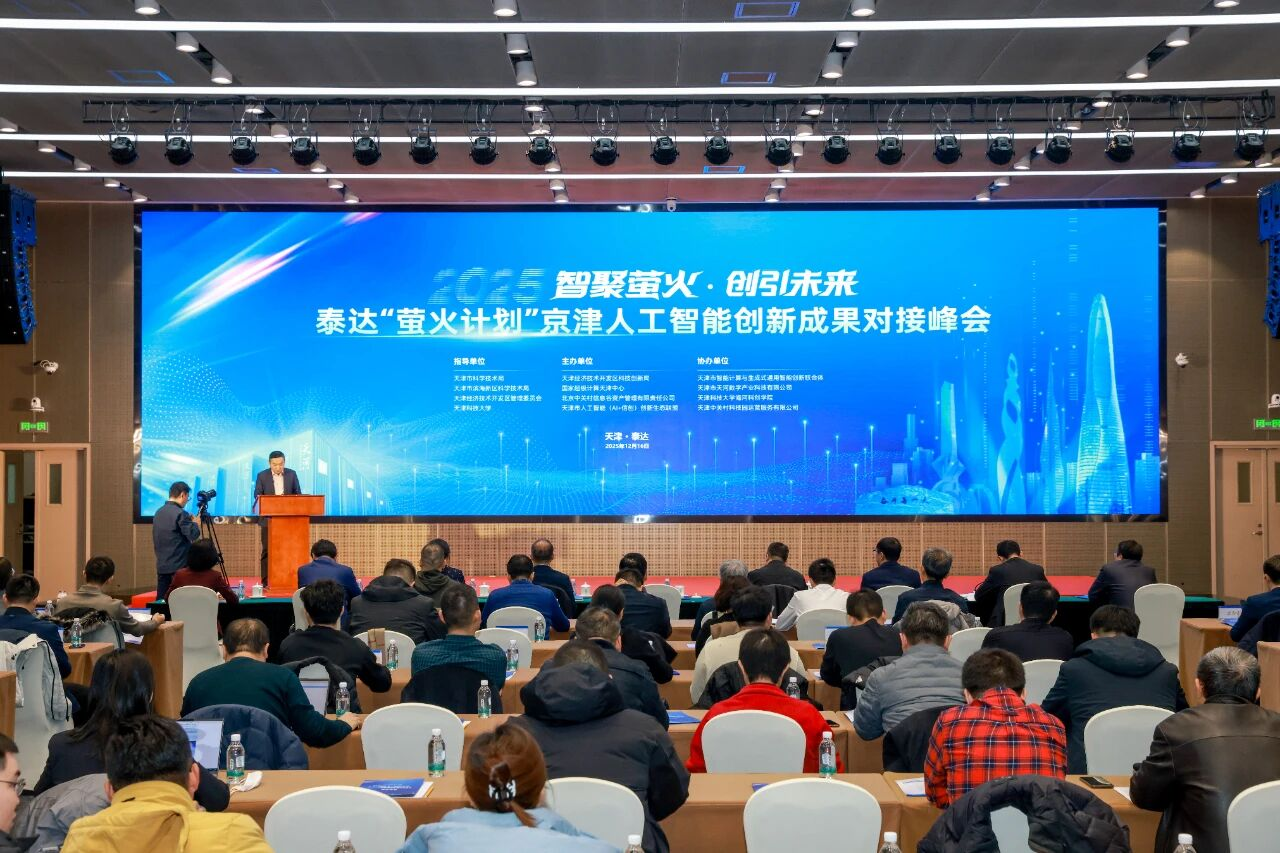
Beyond numerical targets, the plan outlines a clear industrial roadmap. The hardware layer focuses on core components, prioritizing joint modules, speed reducers, motors, and sensors; the software layer targets operating systems and datasets, emphasizing multi-modal perception fusion, autonomous decision-making and planning, as well as data collection, cleaning, and annotation; and the scenario layer zeroes in on industrial verticals, highlighting industrial, underwater, inspection, medical, and humanoid robots, thereby providing a clear navigational guide for industry clustering.
To this end, TEDA has established a dedicated Leading Group for Embodied AI Industry Development to provide full-chain support across multiple dimensions, including technological R&D, enterprise cultivation, scenario application, and factor security. The goal is to transform the region into a core cluster for embodied AI in the Beijing-Tianjin-Hebei area and a pioneering zone for industrial development in Tianjin.
Leading Enterprise-Driven Breakthroughs: Full-Chain Ecosystem Synergizes for Success
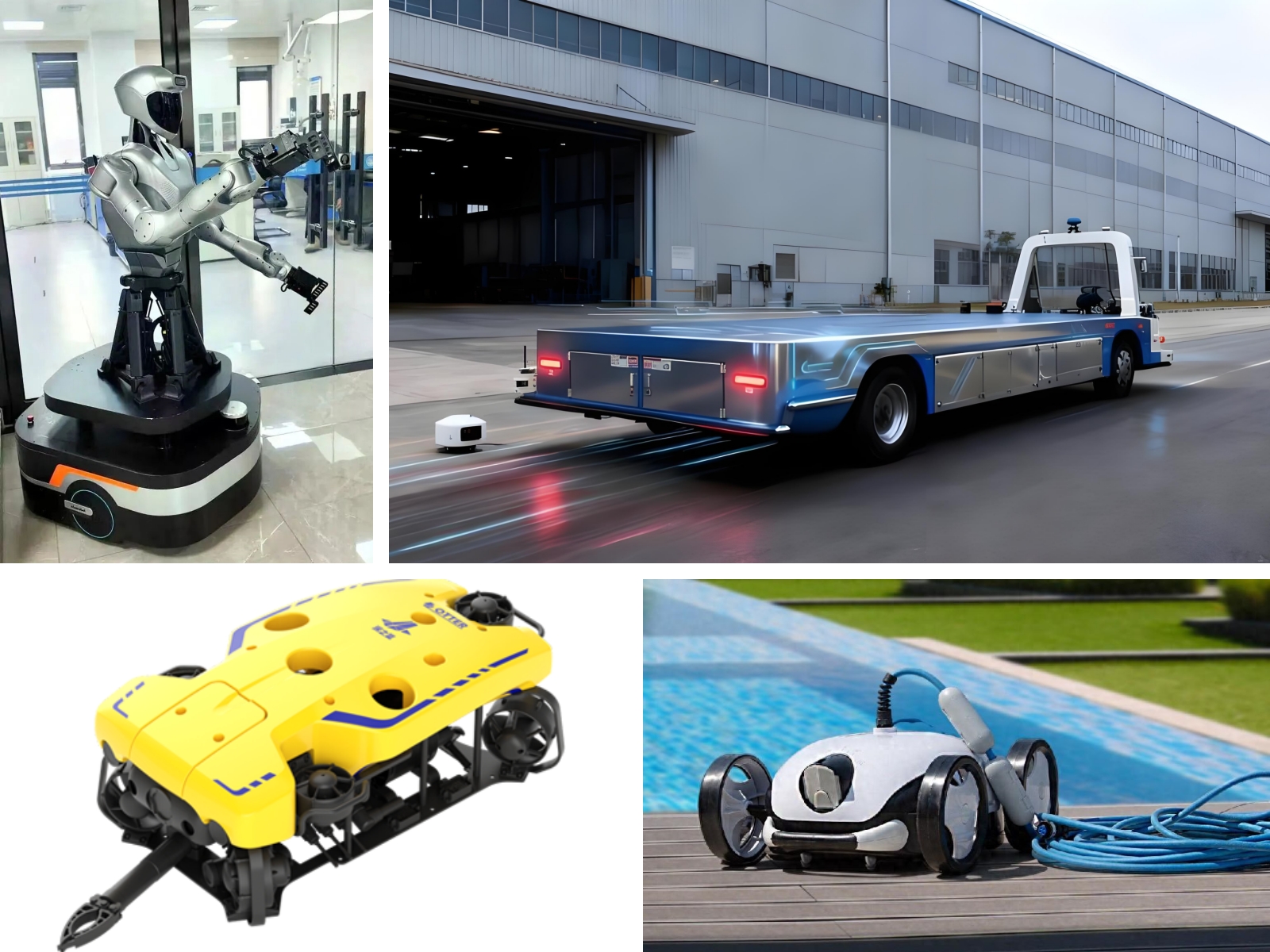
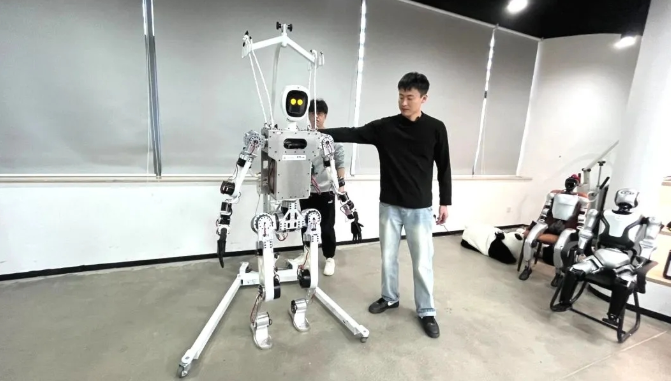
The rise of an industry depends on the construction of a full-chain ecosystem. In TEDA, embodied AI is not a solo performance by a single enterprise; instead, it has evolved into a collaborative development landscape characterized by the leadership of industry giants and diverse breakthroughs across specialized sectors. In the humanoid robotics field, Atomrobot's self-developed "Tianbing-1" is the world's first humanoid robot to utilize parallel mechanisms in its waist. In industrial robotics, Lonyu Robot's heavy-duty AGVs have broken international records and are widely deployed in key scenarios such as automotive manufacturing, port logistics, and high-end equipment production. In the specialized robotics sector, Deepinfar's underwater robots have secured prestigious awards, including the First Prize of the Ocean Engineering Science and Technology Award, the Red Dot Design Award, and the iF Design Award. In service robotics, Wybotics' pool-cleaning robots are exported to more than 60 countries and regions worldwide.
These homegrown rising stars have forged a solid foundation for TEDA's embodied AI industry. Their rapid growth is inseparable from the all-around support provided by TEDA. "Underwater robotics is a massive and complex systems engineering challenge that requires long-term accumulation. Governments at all levels in Tianjin have provided substantial support, offering a stable environment for long-term technological iteration," said Wei Jiancang, the founder of Deepinfar.
"Our choice to land in TEDA is driven by the region's solid manufacturing base and its diverse industrial application scenarios,” said Zhou Jian, the founder, chairman, and CEO of recently established UBTECH Robotics. “TEDA also offers prominent advantages in production costs, operational efficiency, and living standards. With excellent development space and a premium living environment, it serves as a high-quality platform for us to deepen our presence and expand our footprint." Upon its establishment, UBTECH will fully leverage the region's robust advanced manufacturing foundation, superior business climate, and strategic location within the Beijing-Tianjin-Hebei area to accelerate the large-scale industrialization of its cutting-edge products while actively expanding into core northern markets.
Beyond robot manufacturing, upstream core components are also undergoing simultaneous upgrades. TEDA-based enterprises like SDI Chips and C*Core Technology are making steady progress, with their products widely used in information security, automotive electronics, industrial control, edge computing, and network communications. Recently, the National Supercomputing Center in Tianjin unveiled a fusion device platform that integrates exascale supercomputing, intelligent computing, and massive data storage management, providing a full-chain closed-loop environment for embodied AI from algorithm development to practical deployment.
Empowerment through Rich Application Scenarios: Industry-University-Research Integration Drives Industrial Innovation and Development
Practical application holds the key of embodied AI , as technological iteration relies on repeated trials in real-world environments.TEDA offers a uniquely advantageous testing ground. Adjacent to Tianjin Port and home to diverse sectors such as automotive and high-end equipment, petrochemistry, urban governance, and ecological protection, TEDA is perfectly suited for the testing and application of various robots, including industrial, specialized, and humanoid models.
To further strengthen its scenario-based advantages, TEDA has recently established Tianjin's first Automotive Manufacturing Embodied AI Lab and the Muniu Liuma Embodied Intelligence Delivery and Training Center. The former addresses bottlenecks in the automotive industry's intelligent transformation, bridging the gap between frontier AI research and practical vehicle manufacturing applications. The latter integrates R&D validation, pilot production, scenario debugging, batch delivery, and full-cycle operations and maintenance, providing robust support for the large-scale application of robotics. A representative from Muniu Liuma stated: "TEDA is a hub for high-end manufacturing, logistics, and urban operations, offering a vast array of real-world industrial and public service scenarios. By locating our training and delivery center here, we can engage with customers directly and significantly reduce the distance for prototype testing, on-site debugging, and project delivery, addressing the gap between laboratory technology and real-world scenarios." Chen Li, co-founder of Unitree Robotics, also noted that TEDA will serve as a key operational hub for Unitree, with a focus on critical scenarios such as security inspection, fire rescue, education and training, and industrial O&M, promoting the application of intelligent robots in sectors like ports, petrochemistry, and manufacturing.
Furthermore, universities such as Tianjin University, Nankai University, and Hebei University of Technology possess outstanding academic strengths and rich achievements in automation, AI, and robotics. Together with over 20 high-end research platforms in Tianjin, they provide a solid foundation in theory, technology, and talent for the development of the embodied AI industry. The establishment of the Tianjin Robotics Industry Technology Alliance will further deepen industry-university-research synergy. This alliance has brought together research institutes, industry leaders, Specialized, Refined, Differential and Innovative SMEs, industrial funds, and various financial institutions. It has established six major service platforms, focusing on supply-demand matchmaking, key technology breakthroughs, financial empowerment, investment promotion, talent cultivation, and standard setting, greatly addressing the needs across the industrial chain.
Looking ahead, TEDA will leverage its existing industrial foundation to seize development opportunities in the embodied AI industry. With a forward-looking vision, TEDA aims to drive the growth of chains in innovation, industry, and application, accelerating the localized commercialization and industrial application of embodied AI achievements, thereby injecting robust momentum into Tianjin's new quality productive forces and new industrialization.


 津公网安备 12019002000128号