



Application Scenarios in TEDA (Intelligent Technology Industry)

1. Digital Economy

The total existing computing power in TEDA amounts to 1243.48 P. This includes 1012.045 P of supercomputing power, 181.434 P of intelligent computing power, and approximately 150 P of general-purpose computing power, primarily deployed at the National Supercomputing Center in Tianjin(NSCC-TJ).
Planned computing power under construction totals approximately 7000 P, all dedicated to intelligent computing. This includes the Tier Liquid Cooling Intelligent Computing Center (2000 P), the China Mobile Intelligent Computing Center (5000 P), and the Tianhe Hyper-Intelligence Fusion Project (1000 P).
2. Strong Growth in Future Industries' Demand

In the high-end manufacturing sector, leveraging the complex industrial simulation needs of enterprises such as auto manufacturers and the China Automotive Technology and Research Center (CARTARC);
In the biomedical sector, leveraging the drug molecule simulation and clinical trial data processing needs of enterprises such as Asymchem;
In the new-generation information technology sector, leveraging the chip design and smart device development needs of enterprises such as Samsung Display;
In the new chemical materials sector, leveraging the new material synthesis and process optimization needs of enterprises such as Sinopec and Bohua Chemical.

1. Intelligent Management: Digital Transformation of Industrial Parks and Intelligent Upgrading of Apartments
Scenario 1: Digital Transformation of Industrial Parks
Scenario Overview: Intelligent operation and management scenarios for traditional industrial parks and the Beitangwan Digital Economy Industrial Park
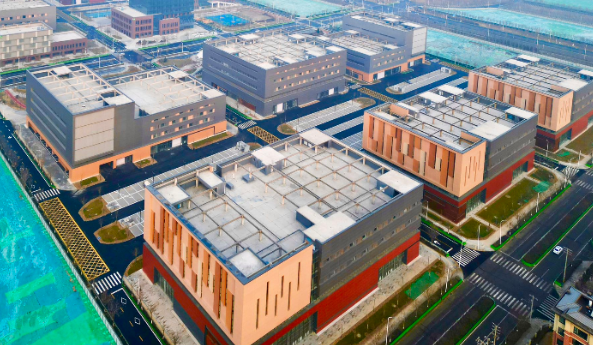
For the start-up phase, main targets include two mature industrial parks—Tianjin University Science Park and the Intelligent Unmanned Equipment Industrial Park—along with the Beitangwan Digital Economy Industrial Park (M0 new industrial land), covering a total area of over 400,000 square meters. The development and operation of related platforms such as digital energy management, parking systems, and surveillance systems can be opened to eligible partners. Later on, transformation will gradually be extended to more TEDA-owned industrial parks, involving over 1.5 million square meters in total.
Specific Market Size: Total renovation and upgrade area of industrial parks may exceed 1.5 million square meters.
Cooperation Method: Technical collaboration
Request for Partner: With successful cases in the intelligent operation, management, and renovation of similar industrial park scenarios
Scenario 2: Intelligent Upgrading for Apartments
Scenario Overview: To establish a digital management platform for the eight apartments operated by Anju Company
Issues to be addressed: A digital management platform for property services, including modules for reporting and repair requests, parking fee payment, and on-site customer complaint hotline; a digital platform for commercial and energy management, aiming to establish a system connecting "tenants - Anju Company - various service providers," while also exploring the overall community services, consumption, and other operational scenarios for all talent apartments in TEDA.
Specific Market Size: 8 apartments operated by TEDA’s state-owned platform enterprise Anju Company
Cooperation Methods: Technical cooperation and joint operation
Request for Partner: With relevant system development experience and successful cases
Scenario 3: Digital Community Operation for Apartments
Scenario Overview: To research and explore the overall community services, consumption, and other operational scenarios of all talent apartments that have been put into use in TEDA
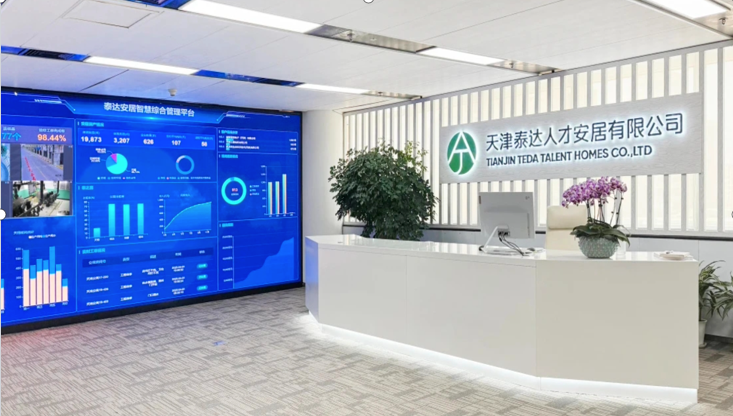
Specific Market Size: 25 apartments in TEDA, serving nearly 100,000 young tenants
Cooperation Method: Technical collaboration and joint operation
Request for Partner: With relevant system development experience and successful case studies
2. Future Industrial Pilot Zone: Intelligent Computing Platform Cooperation
Industrial Advantages
Seizing the opportunity presented by the Tianjin (Binhai New Area) National Artificial Intelligence Innovative Application Pilot Zone, TEDA has cultivated and gathered over 20 common technology hardware platforms and innovation service software platforms, represented by the National Supercomputing Center in Tianjin, as well as a number of technology-based enterprises such as SDI Chips and Tianhe Computer Company. Leading advantages have been established in technological fields including super-intelligent integration, swarm intelligence operating systems, human-computer interaction, system-on-wafer, and multimodal image fusion. The zone has successively been approved as the National New-Generation Artificial Intelligence Public Computing Power Open Innovation Platform and the Tianjin Intelligent Computing and Generative General AI Innovation Consortium.

Scenario: Cooperative Construction of Intelligent Computing Center
Existing Resources: The proposed collaborative project building, which has been completed, is located in the core area of TEDA, adjacent to the National Supercomputing Center in Tianjin. This proximity enables full utilization of the supercomputing center's resources to develop businesses such as big data and cloud computing.
The project has obtained the Tianjin Construction Engineering Planning Acceptance Certificate and meets the conditions for transfer, cooperation, and collaboration in different forms.
The project covers a total area of 21,006.76 square meters (Phase I has already utilized 13,397.8 square meters, while Phase II consists of 7,609 square meters of vacant land).
The total floor area of Phase I is 19,421 square meters, comprising 4 above-ground floors and 1 underground floor. The above-ground floor area is 18,861.3 square meters, and the underground floor area is 192.8 square meters. The project is designed with an installed capacity of 20,000 kVA and features dual-circuit power supply.
Cooperation Method: Asset and Technology Collaboration
Request for Partner: Leading domestic intelligent computing center operato
3.Intelligent Manufacturing: Automotive Supporting Industry Chain Integration, Intelligent Connected Vehicle Demonstration Applications, and Cooperation with the Automotive Chip Standards Testing Alliance
Scenario 1: Automotive Supporting Industry Chain Integration
(1) Upstream and Downstream Industry Chain Integration
The TEDA automotive and new energy vehicle industry chain is deeply integrated into the national strategy of coordinated development in the Beijing-Tianjin-Hebei region. Guided by the concept of “jointly manufacturing a vehicle across the three regions,” TEDA extensively incorporates regional enterprises into the supply system, optimizes the supplier layout and structure, and continuously facilitates exchanges and collaboration among industry chain enterprises.
(2) Research and Development Integration
TEDA aims to establish industry-academia-research collaboration platforms. By strengthening technological research, development, and innovation, TEDA enables information sharing, resource complementarity, and collaborative development among enterprises. These efforts are designed to jointly enhance the technological level and core competitiveness of the automotive supply chain.
(3) Global Market Integration
Leveraging the freight resources of Tianjin Port and the China-Europe freight trains, as well as the advantages of the TEDA Free Trade Zone and Comprehensive Bonded Zone, TEDA assists enterprises in integrating with international industry chains, expands their access to international market resources, and builds a one-stop platform for the export of automobiles and components.
Scenario 2: Intelligent Connected Demonstration Application
Leveraging the opportunity presented by the "Open Testing of Intelligent Connected Vehicles Across the Entire Region," TEDA continues to advance the development of demonstration scenarios such as port logistics and unmanned logistics delivery. It is currently formulating the Management Measures for Unmanned Equipment Operations and collaborates with companies like JD.com and SF Express to create intelligent connected scenarios in TEDA.
(1) Building Unmanned Logistics and Distribution Scenarios around the TEDA Core Area

(2) Building Smart Logistics Scenarios in Specialized Industrial Zones
The routes connecting FAW-Volkswagen North China Base with multiple core component suppliers optimize and facilitate centralized supply of parts, further reducing costs and improving efficiency.
Scenario 3: Cooperation with the China Automotive Chip Standard Detection and Certification Alliance
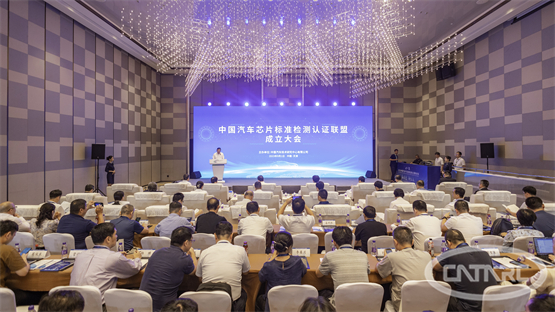
With the support and recommendations from relevant departments such as the Ministry of Industry and Information Technology, the State-owned Assets Supervision and Administration Commission of the State Council, and the State Administration for Market Regulation, TEDA collaborated with the China Automotive Technology and Research Center (CATARC) to establish the China Automotive Chip Standard Detection and Certification Alliance. Simultaneously, the Tianjin Automotive Chip Standard Detection Innovation Federation was founded in TEDA to meet the basic requirements for drafting and releasing group standards. The alliance consists of over 70 domestic carmakers, upstream and downstream companies in the chip industry chain, and research institutions, including CATARC, China FAW Group, Dongfeng Motor Corporation, Changan Automobile, China Electronics Corporation, China Electronics Technology Group Corporation, CESI, CEPREI, and the National Innovation Center, etc.

China Automotive Chip Standard Detection and Certification Alliance aims to promote the establishment of China’s automotive chip standards through standardization and testing, accelerate the adoption of domestic chip products in vehicles, advance the development of the industry ecosystem, and serve the entire industry chain. Cooperation with the alliance can be explored in the following areas:
(1) Expanding Technical Cooperation
Companies can seek partners with complementary business areas for technical collaboration, joint research and development,etc. through the Platform.
For example, chip design companies can collaborate with vehicle manufacturers to customize chip development based on actual requirements and further establish joint laboratories to cooperatively reduce high upfront R&D costs.
(2) Deep Participation in Industry Standard Formulation
Companies can collaborate with other participant to study technical content, testing methods, indicator requirements, etc., of standards to ensure their scientific rigour and practicability.
For example, Vanchip once led the development of the Automotive Chip Technology—Technical Requirements and Test Methods for RF Front-End Chips.
(3) Optimizing the Product Standards System
Companies that clearly define the required technical indicators and quality requirements, optimize these indicators, share technical resources and experience and improve the technical level and performance of automotive chips will receive certificates from CATARC if they meet the relevant standards. The certificates will help their products enter the automotive market.



 津公网安备 12019002000128号