


Non-Invasive Smart Testing Co., Ltd. Unlocks the Future of Healthcare with its Non-Invasive Technology
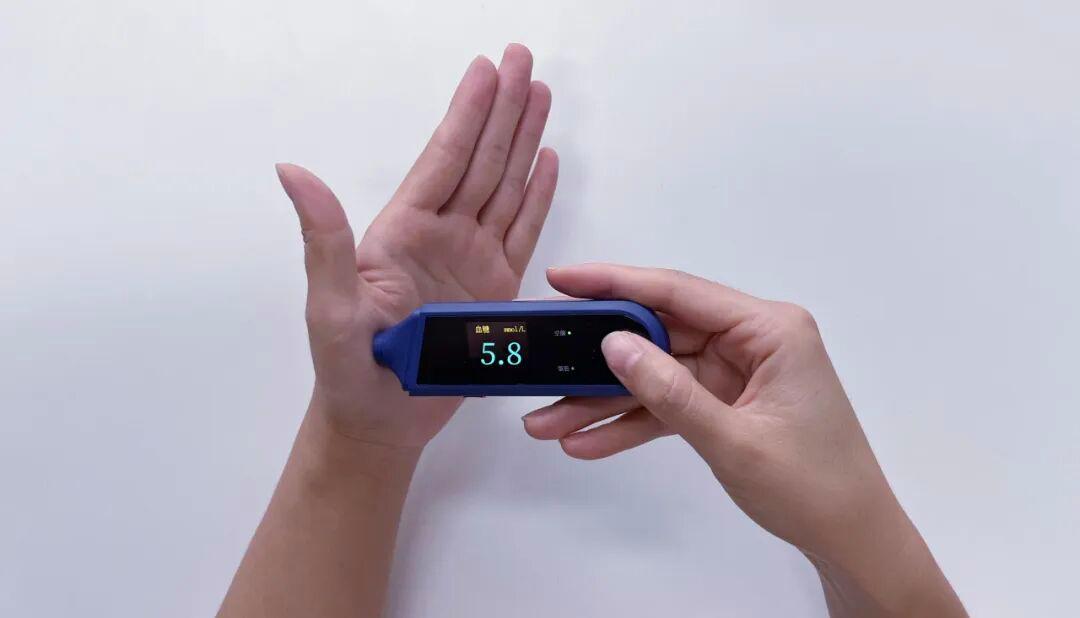
Inside a modern facility at the Binhai-Zhongguancun Science and Technology Park of Tianjin Economic-Technological Development Area (TEDA), a pilot production line is rolling out its first batch of non-invasive blood glucose monitors. By simply touching the device to a part of the body, users can get real-time readings of key health indicators such as blood sugar and uric acid.
Developed by Non-Invasive Smart Testing Technology Co., Ltd.(NIST), this cutting-edge technology not only offers a new way for chronic disease patients to manage their health, but also serves as a vivid example of the “R&D in Beijing, commercialization in Tianjin” model under the national strategy for the coordinated development of the Beijing-Tianjin-Hebei region.
Tech Breakthroughs for Personalized Health Management
Traditional blood glucose testing requires repeated blood sampling, placing both physical and mental burdens on chronic disease patients. NIST has successfully overcome this challenge. Its core technology, based on bioelectromagnetics and integrated with artificial intelligence algorithms, captures bioelectrical signals through specific electronic frequencies to enable non-invasive monitoring of multiple indicators such as blood sugar, uric acid, blood ketones, and glycated hemoglobin.
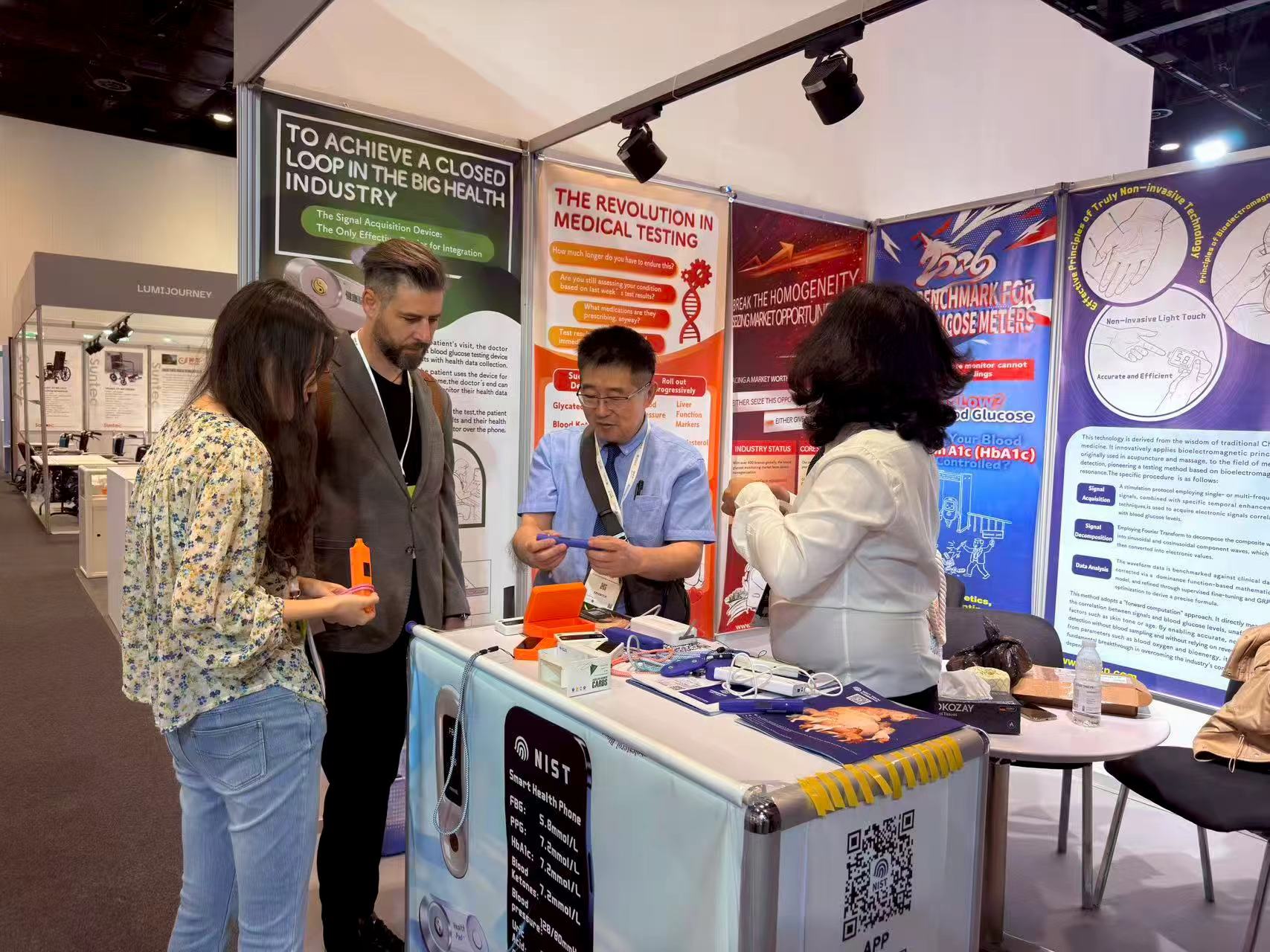
"Our non-invasive testing module can be easily integrated into various portable health devices, allowing real-time monitoring of key chronic disease indicators with just a single point of contact," said Sun Yuhong, head of the company.
The technology is backed by deep R&D expertise. NIST's parent company, Top Biotechnology (Beijing) Co (Top Biotech), has been dedicated to the development of non-invasive testing technologies since its founding in 2015 and has obtained more than a dozen relevant patents, laying a solid foundation for bringing products to market.
"In the future, our technology will cover more indicators such as blood pressure and blood lipids. We aim to build an integrated personal health data center to enable forward-looking, personalized health management," said Sun, expressing confidence in the future of non-invasive testing.
Landing in TEDA to Seize Opportunities from Beijing-Tianjin-Hebei Coordinated Development
As a high-tech company, Top Biotech faced an urgent challenge: how to move its research results from the lab to the production line and ultimately expand into broader markets. After on-site inspections and comprehensive evaluations, the company established its subsidiary NIST in the Binhai-Zhongguancun Science and Technology Park in 2025.
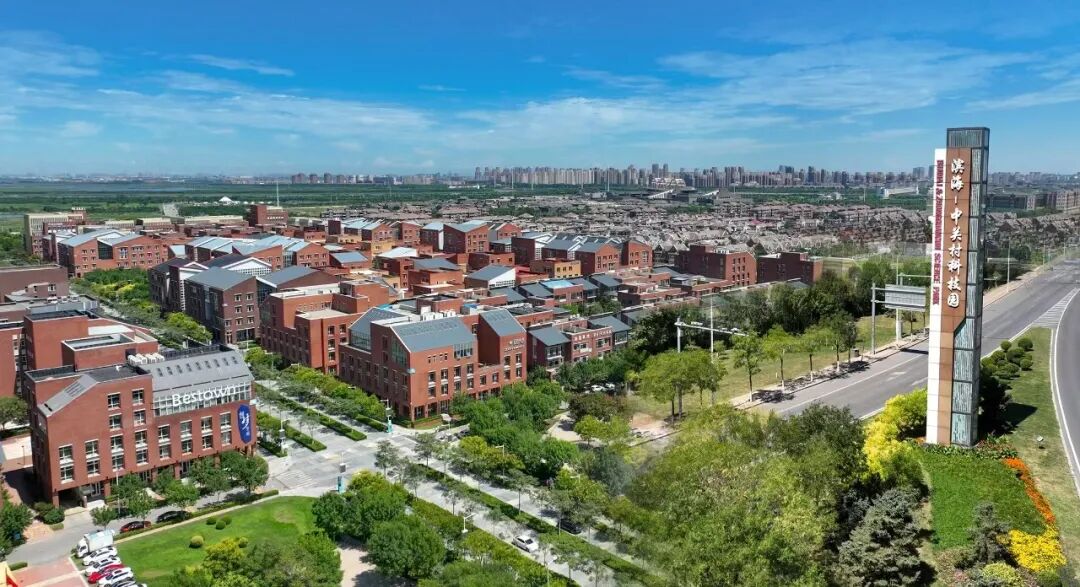
"This was a strategic choice based on the company's own development needs," said Sun. Beijing has top-tier research resources and a vibrant innovation atmosphere, while Tianjin, as a national advanced manufacturing R&D base, boasts a strong industrial foundation, abundant industrial talent, and port advantages. As a key platform of the national coordinated development strategy, the park offers an ideal environment for companies to accelerate their growth.
Thanks to the convenient "one-hour commuting circle" in the Beijing-Tianjin-Hebei region and the combined policy advantages of Beijing's Zhongguancun and Tianjin's Binhai New Area, the park has basically taken shape as a demonstration base for collaborative innovation, a transformation center for research achievements, and an integrated service center, forming a technology service ecosystem mirroring that of Zhongguancun. What's more, the park provides targeted services. For biomedical and medical device companies, it offers R&D facilities that meet industry standards, targeted policy support, a fast-track approval process, and access to clinical resources — addressing tough issues such as R&D space, qualification applications, and technology commercialization.
These are exactly what NIST values most. "What we needed most at the time was a place where we could quickly turn technology into products, speed up market entry, and expand into global markets," Sun recalled.
Rooted in Tianjin, accelerating local industrialization
Since settling in Tianjin, NIST has quickly integrated into the local industrial landscape, forming a coordinated "R&D in Beijing, commercialization in Tianjin" model. "Here, we not only have land and factories, but also partners who are willing to solve problems together with us," Sun said.As a national demonstration base for new industrialization in the biomedical industry and a core hub for Tianjin's biomedical sector, TEDA has built an industrial system covering the entire chain from R&D and production to services. In 2025, the output value of the pharmaceutical and healthcare industry in the area reached 80.93 billion yuan, up 10.3 percent year-on-year. The complete industrial chain, significant cost advantages, and a service ecosystem characterized by "no unnecessary interruptions, prompt responses, and keeping promises" provide fertile ground for NIST, which is at a critical stage of technology commercialization.
Currently, the company's business in Tianjin and the broader Beijing-Tianjin-Hebei region focuses on three main areas:
- Building a standardized R&D base for non-invasive testing equipment, improving the supply chain, and gradually promoting large-scale production of core modules and complete products in Tianjin to accelerate local industrialization;
- Promoting non-invasive health monitoring solutions for community health centers, physical examination institutions, elderly care facilities, and individual households, while facilitating the rollout of regional medical scenarios;
- Collaborating with local universities, research institutes, and medical institutions on joint research, participating in the formulation of industry standards, cultivating interdisciplinary talent, and jointly building an innovation ecosystem.
Going Global with an Innovative "SKD+ODM" Cooperation Model

While cultivating the domestic market, NIST has also set its sights abroad. Instead of the traditional "complete product export" model, the company has introduced an innovative "SKD (Semi-Knocked Down) + ODM (Original Design Manufacturing)" global cooperation model. This approach packages core technologies such as electromagnetic resonance sensing, AI algorithm chips, and TCM clinical intelligence (CI) analysis modules into standardized modules that meet international standards, while providing full-process support including assembly techniques, technical training, and on-site commissioning — allowing overseas partners to customize module functions as needed. This significantly lowers the threshold for local production, enabling partners to produce quickly and flexibly without heavy R&D investment.
The company has already initiated market expansion in Southeast Asia, the Middle East, and Europe, and has signed letters of intent with several overseas medical companies
"Testing without pricks, monitoring with convenience — that's our goal," Sun said. NIST will continue to root itself in Tianjin while reaching out to the rest of the country and the world, further developing non-invasive testing technologies, improving its product and service systems, and helping advance China's original medical technologies onto the global stage for deployment.


 津公网安备 12019002000128号